
Network performance is only part of the picture. The individual radios used by first responders need to be ready, too.
Public safety agencies invest significant resources in reliable radio communications, ensuring that networks are monitored, coverage is tested, and two-way radios are maintained.
However, there’s an important distinction:
A healthy radio system doesn’t necessarily mean every radio operating on it is healthy.
An individual radio can begin experiencing performance issues while the network continues to operate as expected. The unit may still power on, receive calls and appear to be working normally.
So, how does an agency know when a radio begins showing signs of a performance issue?
The Blind Spot Between the Network and the Radio
Network monitoring provides valuable data on infrastructure and system performance, while traditional bench testing gives technicians detailed insights into individual radios when they are brought in for service.
Yet there is a gap between the two.
Two-way radios spend most of their time in the field, not on the bench. If a developing problem isn’t obvious to the user and the radio isn’t scheduled for testing, the technician may have little indication that something has changed.
If a first responder has to report a radio problem before the agency knows it exists, the technician is already reacting to the issue. For agencies managing hundreds or thousands of subscriber radios, that lack of certainty makes it difficult to know which radios actually need attention.
Why This Matters Beyond the Radio Shop
For public safety leadership, radio health isn’t simply a technical concern. It affects operational readiness, maintenance resources, and the communications equipment personnel rely on every day.
Traditional preventive maintenance and bench testing remain essential. The challenge is knowing what is happening between those tests.
What if technicians could identify radios showing signs of performance problems before the user recognizes an issue?
That changes the maintenance conversation from:
Which radios should we test?
to:
Which radios are telling us they need attention?
Moving From Reactive to Proactive Radio Maintenance
Over-the-air (OTA) radio analysis provides a clearer view of radio performance. Instead of relying solely on scheduled testing or user-reported problems, OTA monitoring analyzes normal radio transmissions while units remain in everyday use.
Radio performance can be evaluated remotely without routinely pulling radios from service or requiring additional action from the user.
The goal isn’t to replace technicians, preventive maintenance, or bench testing, but rather to give technicians better information about where their attention is actually needed.
Where DiagnostX Fits
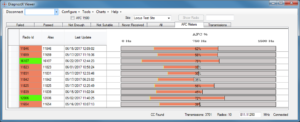
DiagnostX provides continuous visibility into two-way radio performance using patented over-the-air radio analyzer to passively identify radios operating outside user-programmable parameters.
For technicians, DiagnostX provides detailed measurements used to evaluate radio performance precisely. Agency leadership sees a simpler value proposition: DiagnostX distinguishes healthy radios from those showing signs of performance issues, giving technicians the knowledge to act before a user reports a failure.
This creates an opportunity to prioritize the radios that need attention while allowing healthy radios to remain in service.
DiagnostX also generates time-stamped performance records, providing agencies with historical data when questions arise later.
Three Questions Public Safety Leaders Should Ask
You don’t have to be an RF engineer to determine whether there may be a gap in your agency’s radio maintenance strategy. Consider asking these three questions:
- Do we know which radios in our fleet may be developing performance problems right now?
- Are we finding radio problems proactively, or are we primarily discovering them after users report an issue?
- Can our maintenance team identify which radios need attention without physically testing the entire fleet?
If those questions are difficult to answer, it may be worth looking at what over-the-air radio diagnostics can add to your existing maintenance program.
Beyond Network Performance
Network testing confirms that a signal is present. However, reliable public safety communications also depend heavily on the radio in the hands of the user.
By integrating over-the-air radio performance monitoring into an existing maintenance strategy, agencies can pinpoint potential radio issues earlier, better prioritize maintenance resources, and strengthen overall operational readiness. Confidence in your radio system should extend all the way to the individual radios your personnel rely on.
Do You Know Which Radios in Your Fleet Need Attention?
See how DiagnostX can strengthen your maintenance program.